Table of Contents
- When to Call a Professional for Dishwasher Repair
- Common Dishwasher Problems That Signal a Breakdown
- Unusual Noises, Cloudy Dishes, and Other Warning Signs
- Dishwasher Troubleshooting: Safe DIY Checks vs. Professional Repairs
- Dishwasher Repair Cost and Repair or Replace Decisions
- How to Prepare for a Professional Repair Visit
- Frequently Asked Questions
Last Updated: October 13, 2026
When to Call a Professional for Dishwasher Repair
A dishwasher that leaves grit on every plate or pools water under the door is showing one of the clearest signs your dishwasher needs professional repair. Knowing the signs your dishwasher needs professional repair can save you from a flooded kitchen, a ruined floor, and a repair bill that grows the longer you wait. At Appliance Specialists of Oklahoma, we run on-site diagnostics in the Tulsa metro area.
Dishwashers fail in predictable stages. A small leak becomes a warped door seal. A faint grinding noise becomes a burned-out motor. Catching the warning signs early keeps a repairable appliance out of the landfill.
Below, we break down the symptoms that mean “call a certified technician” versus the ones you can check yourself in ten minutes.
Never ignore water pooling under the dishwasher. Even a slow leak can rot the subfloor and warp cabinets within weeks, turning a simple seal replacement into a remodeling project.
Common Dishwasher Problems That Signal a Breakdown
Most breakdowns announce themselves before they happen. The trick is knowing which symptom points to which part. Use the symptom-to-cause map below as a starting point, then read the notes that follow. A technician confirms the diagnosis with a multimeter and a visual inspection; the map tells you what to expect and how urgent it is.
| Symptom | Likely components | Urgency |
|---|---|---|
| Dishes still dirty after a full cycle | Clogged filter, blocked spray arm, weak wash pump, low fill from inlet valve | Low to moderate |
| Water pooling under the door | Worn door gasket, misaligned latch, cracked tub | High, shut off water |
| Water under the unit | Loose or split drain hose, failing inlet valve, pump seal | High, shut off water |
| Standing water after a cycle | Clogged drain hose, blocked filter, failing drain pump, stuck check valve | Moderate, stop running cycles |
| Grinding noise | Foreign object in pump impeller, worn motor bearings, failing circulation pump | High, stop using |
| Buzzing | Failing drain pump, stuck solenoid valve, loose wiring | High, stop using |
| Squealing | Worn motor bearing, failing belt on older models | Moderate |
| Dishes cool and wet at cycle end | Failed heating element, faulty thermostat, door latch not sealing | Low to moderate |
| Cloudy film or spots | Hard water mineral buildup, rinse aid dispenser failure, low water temperature | Low |
| Won’t start or stops mid-cycle | Door latch switch, control board, thermal fuse, float switch | Moderate |
| Water not filling | Closed supply valve, clogged inlet screen, failed inlet valve, float switch stuck | Moderate |
Poor Cleaning Performance and Dirty Dishes After a Full Cycle
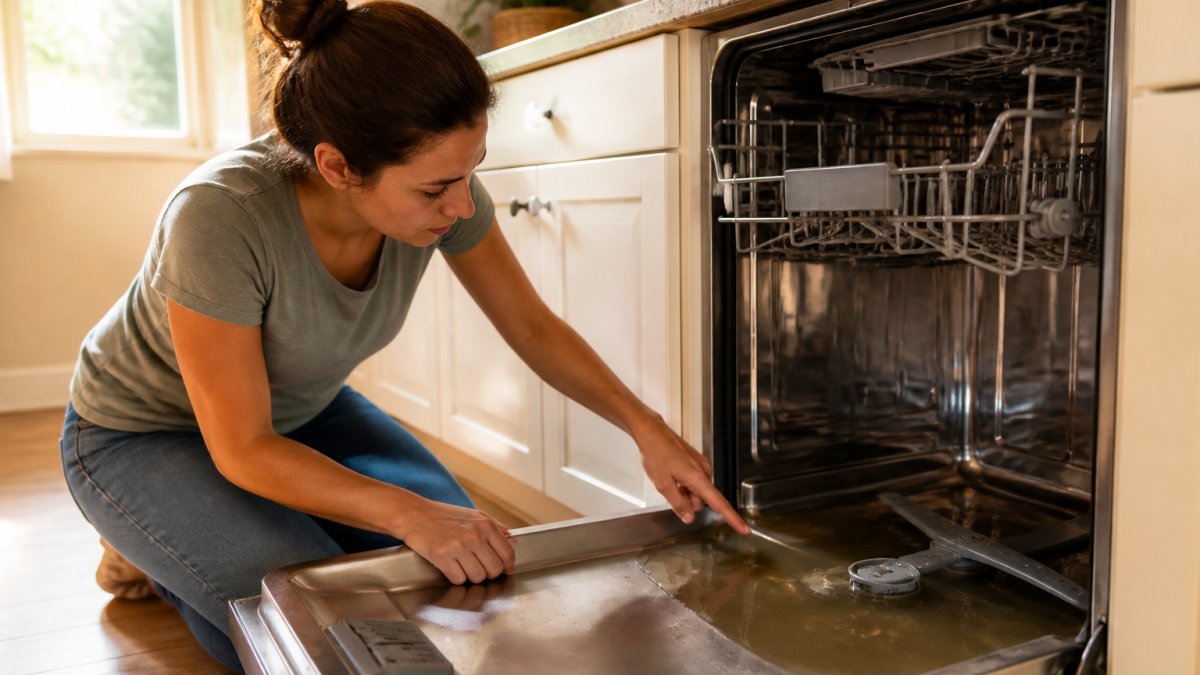
The most common dishwasher problem is poor cleaning performance: dishes come out with food residue, film, or grit even after a full cycle. That usually points to a clogged filter, a blocked spray arm, or a water inlet that isn’t filling properly.
Check the filter first. Most modern dishwashers have a removable filter at the bottom of the tub, and food particles collect there fast. Rinse it under warm water. If the dishes still come out dirty after that, the spray arm may be clogged or the wash pump may be losing pressure. A dishwasher that fills with too little water will never clean well. If you open the door mid-cycle and the water level looks low, that’s a filling problem, not a soap problem.
Water Leaks, Standing Water, and Drainage Problems
Water where it shouldn’t be is the clearest sign of mechanical failure. Leaks around the door usually mean a worn door gasket or a misaligned latch. Leaks underneath the unit often trace back to a loose drain hose or a failing water inlet valve.
Standing water in the bottom of the tub is a drainage problem. The usual culprits are a clogged drain hose, a blocked filter, or a failing drain pump. Left alone, that standing water grows bacteria and smells, and the pump eventually burns out from working against the blockage.
If you see water actively running onto the floor, shut off the water supply valve under the sink and cut power at the breaker before doing anything else. A slow drip that has been running for days can rot the subfloor and warp cabinets, turning a simple gasket replacement into a remodeling project.
If your dishwasher holds standing water after a cycle, stop running it. Each cycle pushes the failing pump harder and can turn a simple drain hose clog into a full pump replacement.
Unusual Noises, Cloudy Dishes, and Other Warning Signs
Some warning signs are quiet. Cloudy dishes and cool plates at the end of a cycle point to poor drying, often caused by a failing heating element or a door latch that isn’t sealing. If your dishes come out cool and wet, the machine may not be reaching temperature.
Grinding, Buzzing, and Squealing Sounds
Unusual sounds are the most urgent warning signs. A grinding noise usually means something is jammed in the garbage disposal or pump impeller, or that the motor bearings are failing. A loud buzzing often points to a failing water pump or a stuck valve. Squealing typically comes from a worn motor or a failing belt.
None of these sounds fix themselves. A grinding noise that starts small becomes a seized motor within a few cycles.
Other signs worth a professional inspection:
- The dishwasher won’t start or stops mid-cycle
- The door latch won’t catch or feels loose
- Dishes come out unusually cool
- Water spots and food residue persist after two clean cycles
- The unit runs but nothing inside gets wet
Write down exactly what you hear and when. A technician who knows the noise happens during the drain cycle, not the wash cycle, can often diagnose the failing part before opening the door.
Dishwasher Troubleshooting: Safe DIY Checks vs. Professional Repairs
Some checks are safe for any homeowner. Others require training, tools, and a shutoff you can trust. Here’s the line we draw.
Safe DIY checks:
- Clean the filter and spray arm
- Wipe the door seal and check for visible cracks
- Confirm the door latch closes fully
- Check that the water supply valve is open
- Run a cycle with the correct amount of detergent
Professional-only repairs:
- Replacing the water inlet valve, pump, or motor
- Repairing leaks behind the unit or under the floor
- Diagnosing electrical faults or control board failures
- Any repair requiring the unit to be pulled out and disconnected
If a DIY check doesn’t fix the problem after two attempts, stop. Persistent problems usually mean a mechanical failure that gets worse with every cycle.
For safety guidance on appliance electrical hazards, the U.S. Consumer Product Safety Commission publishes recall and safety notices worth checking before any repair.
Dishwasher Repair Cost and Repair or Replace Decisions
Dishwasher repair cost depends on the part, the brand, and how far the failure has progressed. We don’t quote prices here because every job is different, but the decision framework is simple once you know the numbers to compare.
Typical Repair Cost Ranges
Most dishwasher repairs fall into a few bands. Parts and labor vary by market and brand, but the ranges below reflect common failures:
- Door gasket or latch replacement: low-cost repair, usually the cheapest fix on the list.
- Drain hose or filter service: low to moderate, often bundled with a cleaning.
- Water inlet valve replacement: moderate.
- Drain pump replacement: moderate to high.
- Circulation or wash pump replacement: high, often the most expensive single-part repair.
- Control board replacement: high, and parts availability varies widely by brand.
- Heating element replacement: moderate.
A service call itself typically carries a diagnostic fee. Ask about that before you book.
The Repair-or-Replace Rule of Thumb
A widely used rule among appliance technicians: if the repair cost exceeds half the price of a comparable new dishwasher, replacement usually wins.
| Factor | Lean Toward Repair | Lean Toward Replace |
|---|---|---|
| Appliance age | Under 8 years | Over 10 years |
| Repair scope | Single part, seal, or hose | Pump and motor together |
| Cycle performance | Otherwise strong | Multiple failures |
| Leak history | First leak | Repeat leaks |
| Parts availability | Readily sourced | Hard to find |
| Warranty coverage | Part still covered | Out of warranty |
A certified technician can give you a straight answer after an on-site inspection.
Warranty and Age Math
Before you approve any repair, check two things: the manufacturer warranty and any extended service plan. If the failed part is still covered, the repair may cost you only the diagnostic fee. If the appliance is out of warranty and past its expected service life, every additional repair is money you won’t recover.
Ask the technician for the part number and the labor estimate in writing before work begins. That lets you compare the repair quote against the price of a comparable new unit at a local retailer and make the call with real numbers instead of a gut feeling.
If your appliance is still under a manufacturer warranty, check the terms before any repair. The Federal Trade Commission’s guide to warranties explains your rights, including when a warranty can and cannot require a specific service provider.
How to Prepare for a Professional Repair Visit
A little preparation makes the visit faster and the diagnosis sharper. Before the technician arrives:
- Clear the counter above the dishwasher and empty the lower cabinets if accessible.
- Note the model and serial number, usually on a sticker inside the door edge.
- Write down the symptoms: when they started, what you hear, and what you’ve already tried.
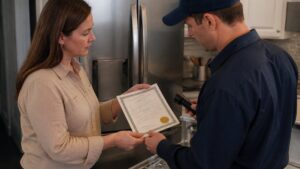
- Have your warranty paperwork ready if the appliance may still be covered.
- Clear a path to the unit and secure pets.
If your appliance is still under a manufacturer warranty, check the terms before any repair. The Federal Trade Commission’s guide to warranties explains your rights, including when a warranty can and cannot require a specific service provider.
For homeowners in the Tulsa metro area, Appliance Specialists of Oklahoma performs on-site diagnostics in your home, so nothing has to be hauled away or guessed at. Most repairs are completed within three days, with local parts sourcing to speed things up.
Frequently Asked Questions
What are the most common faults with a dishwasher?
The most frequent issues include poor cleaning performance, water leaks around the door or underneath, standing water from drainage problems, and unusual noises like grinding or buzzing. Other common faults are cloudy dishes with spots, the dishwasher not starting or completing a full cycle, and poor drying that leaves dishes cool and wet. Many of these stem from clogged filters, worn door seals, or failing water inlet valves and pumps.
Is it worth paying to fix a dishwasher?
It depends on the appliance’s age and the type of repair. A certified technician can give you an honest assessment of whether repair or replacement makes more sense for your situation.
How long does a dishwasher last?
Regular maintenance like cleaning the filter and checking the door seal can extend a dishwasher’s lifespan.
When should I call a professional to repair my dishwasher?
Call a professional when you notice water leaks, standing water that won’t drain, grinding or squealing noises, or the dishwasher fails to start or complete a cycle. These signs often point to failing pumps, motors, or inlet valves that require specialized tools and parts. If basic troubleshooting like resetting the unit or cleaning the filter doesn’t solve the problem, it’s time to book a repair visit.
A dishwasher that leaks, grinds, or leaves standing water won’t fix itself, and waiting almost always costs more than calling. If you’re seeing the signs your dishwasher needs professional repair, Appliance Specialists of Oklahoma can help. Our certified technicians provide on-site diagnostics, transparent pricing, and reliable repairs done right the first time, with most jobs finished within three days. Book a repair now and get your kitchen back to normal.