Table of Contents
- Safety First: Before You Troubleshoot a Washer Not Draining
- Washer Drain Hose Clogged: How to Check and Clear It
- Clean Washer Drain Pump Filter: Step-by-Step
- Washing Machine Drain Pump Not Working: Diagnosis and Fixes
- How to Drain a Washing Machine Manually
- Reset and Restart: When to Try a Simple Reset
- When to Call a Professional for a Washer Not Draining
- Frequently Asked Questions
Last Updated: October 19, 2026
Safety First: Before You Troubleshoot a Washer Not Draining
Standing water and a washer that won’t drain can feel like a disaster, but the fix is often simpler than you think. Before you touch anything, protect yourself and your home. This guide from Appliance Specialists of Oklahoma walks you through the safe way to diagnose a washer not draining, starting with the basics most people skip.
Unplug the washer from the wall outlet before you inspect or open anything. Water and electricity do not mix, and a shock risk is real even when the machine looks off.
Here is your pre-check list:
- Unplug the power cord and turn off the water supply valves
- Put on rubber gloves and safety glasses
- Lay down old towels and keep a shallow bucket or wet/dry vacuum nearby
- Wait for the drum to stop completely before opening any panel
A common mistake is tipping a front-load washer without help. They are heavy and unstable. Get a second person before you tilt one back.
Never reach into the pump or filter area while the washer is still plugged in or full of water. A sudden drain cycle can start without warning if power is still connected.
Once the machine is safe, you can start tracing the problem. Most drain failures come down to three things: a clogged hose, a blocked filter, or a failing pump. We will check each one in order.
Washer Drain Hose Clogged: How to Check and Clear It
A washer drain hose clogged with lint, soap residue, or debris is one of the most common reasons a machine stops draining. The hose carries dirty water out of the drum, and anything that builds up inside slows or stops the flow.
Start by finding the hose at the back of the machine. It runs from the washer to a standpipe or laundry sink. Look for kinks first. A sharp bend can block water just as effectively as a clog.
If the hose looks clear on the outside, disconnect it and inspect the inside. Here is how:
- Pull the hose off the drain connection and the back of the washer
- Hold it over a bucket and check for water flow
- Look inside with a flashlight for lint, coins, or socks
- Flush it with a garden hose to push out loose debris
The U.S. Department of Energy guide to laundry appliances notes that proper drainage protects both the machine and your home from water damage.
Reconnect the hose firmly and check the standpipe or household drain too. A blocked household drain will make the washer look broken when the real problem is the pipe.
Clean Washer Drain Pump Filter: Step-by-Step
The pump filter traps coins, lint, and small items before they reach the drain pump. When it clogs, water backs up and the machine stops mid-cycle. Cleaning it is a job most homeowners can do in about fifteen minutes.
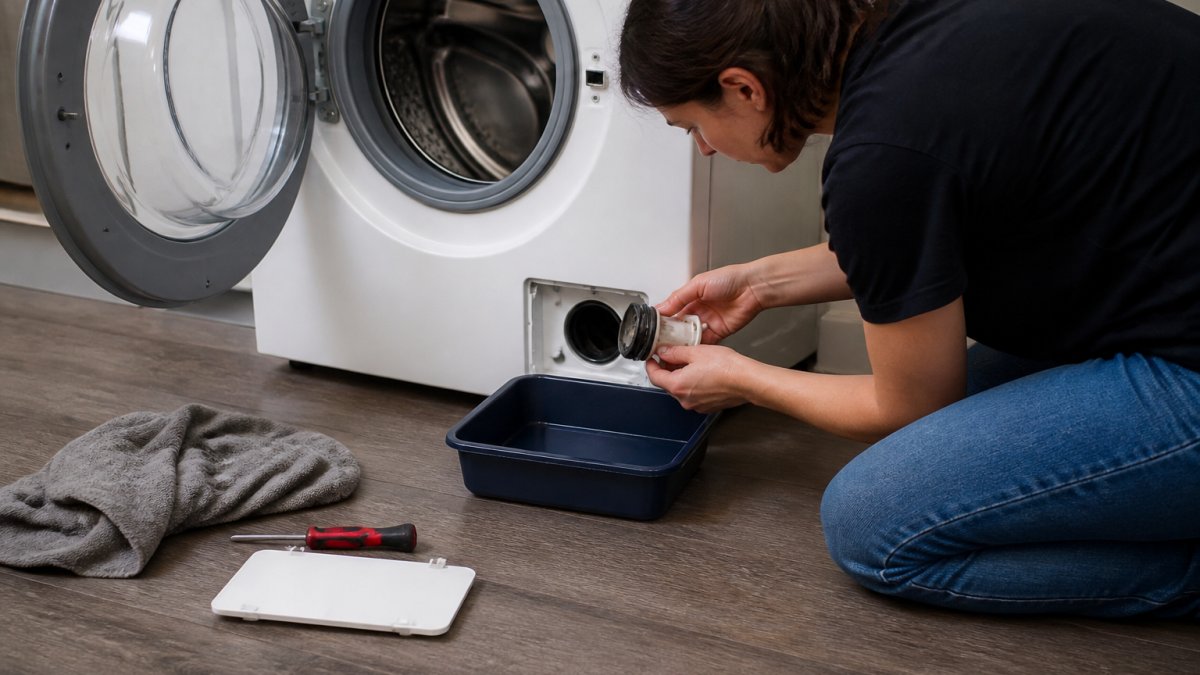
Here is how to clean a washer drain pump filter:
- Unplug the washer and move it away from the wall
- Locate the filter door, usually at the bottom front of a front-load washer
- Place a shallow pan and towel under the door to catch water
- Open the small drain hose first and let water flow into the pan
- Unscrew the round filter cap slowly and pull it out
- Rinse the filter under running water and remove all debris
- Reinstall the filter, close the door, and run a drain cycle
Top-load washers often hide the filter behind the front panel or under the drum, so check your model’s manual for the exact spot.
If your filter cap will not budge, do not force it. A stuck cap usually means pressure is still in the line. Open the small drain hose first and let the water out, then try again.
Washing Machine Drain Pump Not Working: Diagnosis and Fixes
A washing machine drain pump not working usually shows itself through sound and timing. Listen for a humming noise with no water movement, or a series of clicking sounds. Both point to a pump that is trying to run but blocked or failing. Use the symptoms below to narrow the cause before you buy a part.
Start with the sound and the cycle.
| Symptom | Likely Cause | First Check |
|---|---|---|
| Humming, no drainage | Blocked pump impeller or filter | Clear the filter and pump |
| Clicking sounds | Object stuck in pump | Remove debris |
| No sound at all | Faulty pump, wiring, or control | Test pump for power, check door/lid lock |
| Drains slowly, then stops | Partial hose or household drain clog | Inspect hose and standpipe |
| Error code on display | Sensor, pump, or drain fault | Look up code in owner’s manual |
| Pump runs but drum will not spin | Lid switch or door latch fault | Close firmly, check latch |
Follow the decision path.
- Does the machine make any pump sound? If yes, go to step 2. If no, check the lid switch or door latch first, a machine that thinks the lid is open will not drain or spin. If the latch is fine, the pump may be getting no power; that is a wiring or control-board check best left to a technician.
- Does the pump hum but move no water? The impeller is likely jammed. Unplug the washer, drain the drum, remove the pump, and clear the obstruction. A sock, coin, or bra wire is the usual culprit.
- Does water move slowly rather than not at all? The restriction is probably downstream. Inspect the drain hose for kinks and the standpipe or household drain for a clog before touching the pump.
- Does the machine show a code? Look the code up in your owner’s manual before assuming the worst. Some codes simply mean the cycle needs a restart; others point to a specific sensor or pump fault. Do not treat a code as a definitive diagnosis, it narrows the system, not the part.
Test the pump if you are comfortable. With the washer unplugged and drained, disconnect the pump and check the impeller for free movement. A pump that spins freely and gets power but moves no water is usually worn. A pump that will not spin by hand is jammed or seized.
If the pump hums but will not move water, an object like a sock or coin may be jammed in the impeller. Remove the pump, clear the obstruction, and test it again. If the pump is silent and gets no power, the pump motor may need replacement, and on many models the pump is a replaceable module rather than a serviceable part.
Before replacing a pump, confirm the filter and hose are clear. A new pump on a clogged line will fail the same way and cost you the part twice.
How to Drain a Washing Machine Manually
When water is stuck in the drum, you need to get it out before you can work. Knowing how to drain a washing machine manually saves you from a flooded floor and lets you inspect the pump safely.
Front-load washers. Most front-loaders have a small service hose tucked beside the pump filter behind the lower front access panel. Place a shallow pan and towels underneath, pull the hose cap slowly, and let water trickle into the pan.
Top-load washers. On most top-loaders the drain hose exits the back of the cabinet and hooks over a standpipe or laundry sink.
High-efficiency (HE) machines. HE top-loaders and front-loaders often hold less water but run longer drain cycles, so a partial clog can look like a full stop. Before you drain manually, run a drain-and-spin cycle once.
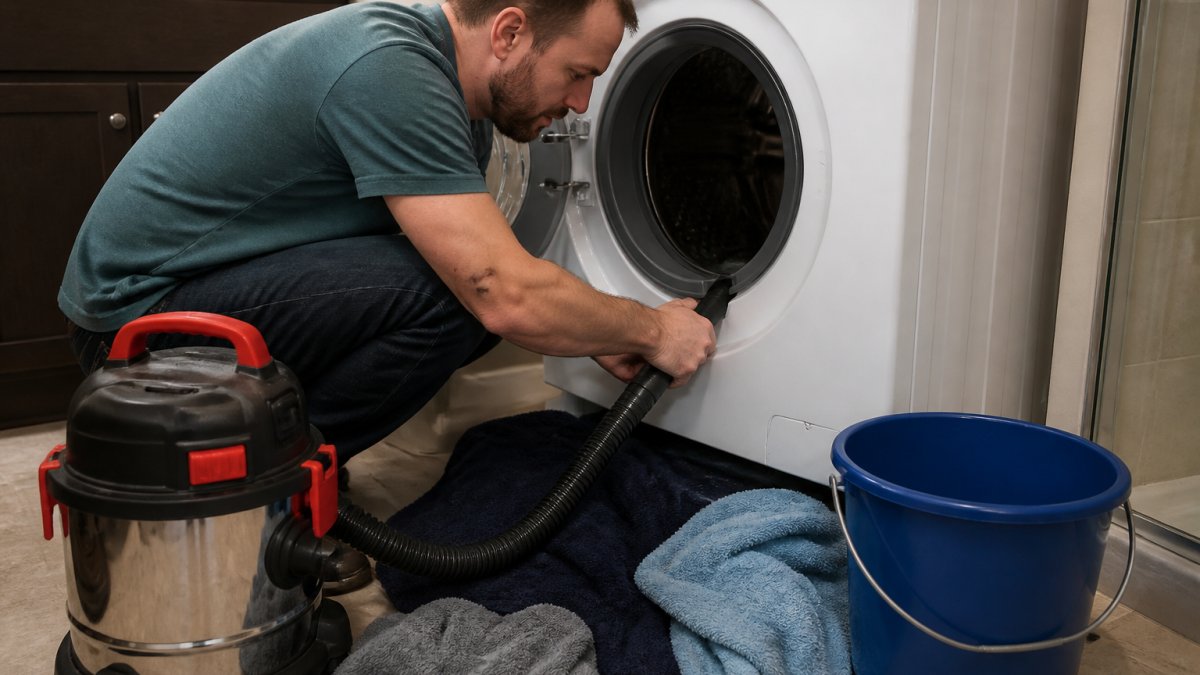
The wet/dry vacuum method. A shop vac works on any machine type. Pull the washer drain hose out of the standpipe, seal the vac hose over the end with a rag or tape, and pull water into the vac canister.
Bucket-and-gravity method. If you have no vac, lower the drain hose into a five-gallon bucket on the floor.
Always remove standing water before opening the pump or filter. It prevents spills, protects your floor, and makes the repair safer. Match the drain method to your machine type, front-load service hose, top-load gravity drain, or a wet/dry vacuum for either.
Reset and Restart: When to Try a Simple Reset
Sometimes the machine is fine and the control board just needs a fresh start. A washer that stops mid-cycle with water in the drum may simply need a reset before you dig into parts.
Try this reset sequence:
- Unplug the washer for one full minute
- Plug it back in and select a drain and spin cycle
- Press start and listen for the pump
- If water drains, the issue was a glitch, not a broken part
You can also check the lid switch or door latch. A machine that thinks the lid is open will not spin or drain. Close it firmly and try again.
If the reset works, watch the next few loads. A problem that returns points to a real fault, not a one-time glitch. That is your cue to inspect the pump and filter again.
When to Call a Professional for a Washer Not Draining
Some drain problems are safe to fix yourself. Others need a certified technician, especially when the pump, wiring, or control board is involved. Knowing the line between the two saves time and money.
Call a pro when:
- The pump is silent and gets no power
- You see error codes you cannot clear
- Water leaks from the pump housing or hoses
- The machine is still under warranty
- You have cleared the filter and hose but water still will not drain
Warranty coverage matters here. Many manufacturers require certified service to keep coverage valid, so check your paperwork before you open panels. The Federal Trade Commission guidance on appliance warranties explains how warranty terms work and what can void them.
If you are in the Tulsa metro area, our certified technicians at Appliance Specialists of Oklahoma handle on-site diagnostics. We check the pump, hose, and filter in one visit and give you a clear answer on repair versus replacement.
A washer that will not drain is frustrating, but most cases trace back to a clogged hose, a dirty filter, or a struggling pump. If you have tried the steps above and water still will not move, it is time for a professional diagnosis. At Appliance Specialists of Oklahoma, our certified technicians offer on-site diagnostics, transparent pricing, and repairs completed within days. We source local parts for faster turnaround and stand behind every repair. Book a repair now and get your laundry room back to normal.
Frequently Asked Questions
My washing machine drain pump isn’t working. What could be causing this?
A washing machine drain pump not working often results from a clogged pump filter, a kinked or blocked drain hose, or debris stuck in the pump impeller. First, check the filter and hose for lint, coins, or socks. If those are clear, the pump may be faulty. You can test the pump for continuity with a multimeter if you’re comfortable, but many homeowners prefer a professional diagnosis to avoid misdiagnosis. Regular cleaning prevents most pump issues.
How do I reset my washing machine?
To reset most washers, unplug the machine or turn off the circuit breaker for 1-2 minutes, then restore power. Alternatively, press and hold the Start/Pause button for 3-5 seconds. Some models have a dedicated Reset button. This clears temporary errors and can restart a stalled drain cycle. If the washer not draining error returns, the issue is likely mechanical, such as a clog or faulty pump, and needs further inspection.
How can I tell if a washer drain hose is clogged?
Signs of a washer drain hose clogged include slow draining, water backing up into the tub, or visible kinks behind the machine. Disconnect the hose from the drain and inspect for lint, socks, or debris. You can also pour water through it to check flow. If water doesn’t pass freely, use a plumbing snake or replace the hose. Keeping the hose free of kinks and regularly checking the filter helps prevent clogs.
Can I clean a washing machine drain pump filter myself?
Yes, cleaning the drain pump filter is a DIY-friendly task. First, unplug the washer and place towels around the access panel. Open the filter door (usually at the bottom front) and slowly unscrew the filter to drain water into a shallow pan. Remove lint, coins, and debris, then rinse the filter and reinstall it securely. Consult your manual for exact location, as top-load and front-load models differ. Regular cleaning every few months prevents drain issues.